

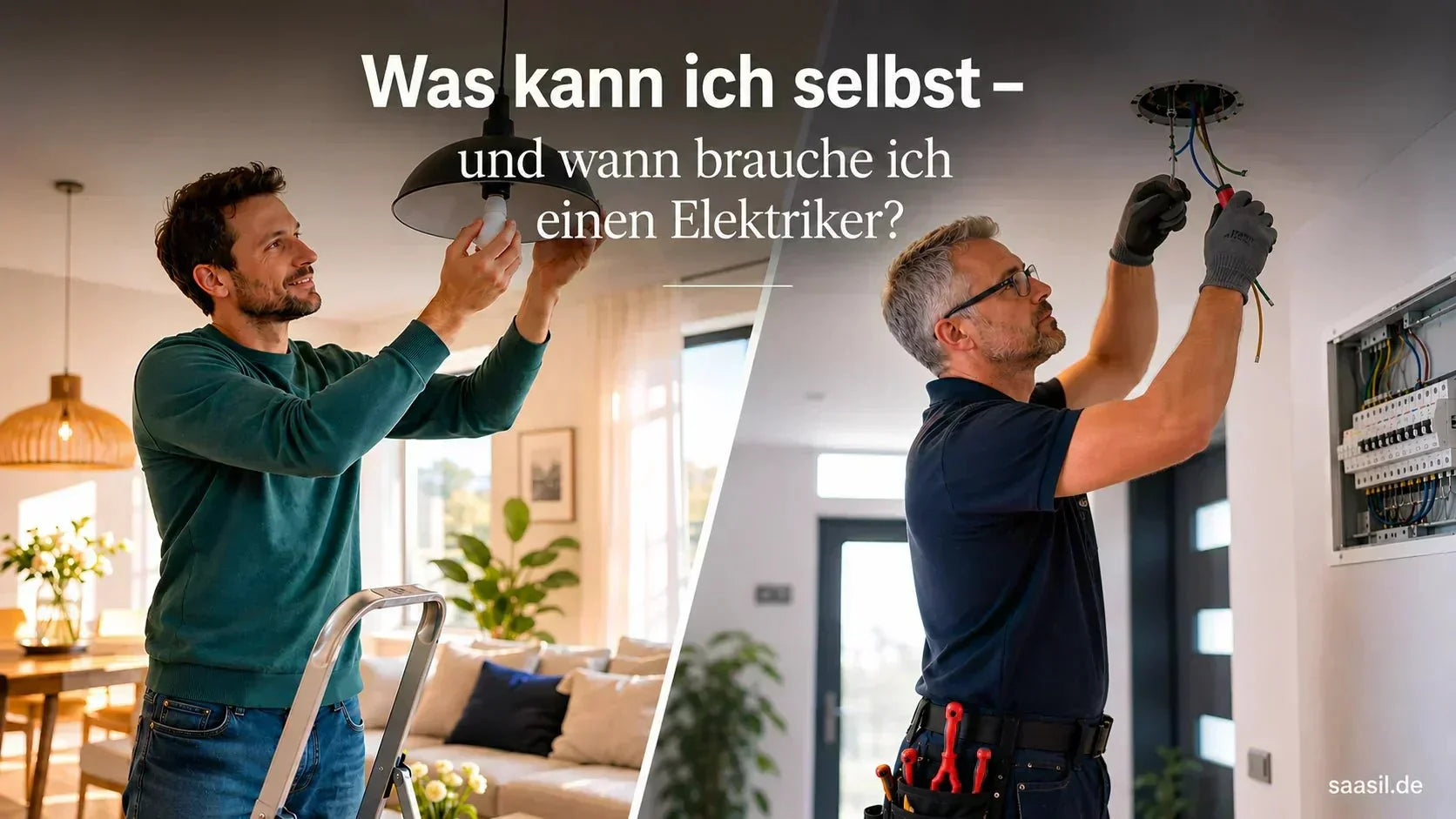
Hanging a new lamp, connecting a dimmer, replacing a power outlet – it sounds simple. But in Germany, there are clear legal rules regarding what DIY enthusiasts are allowed to do with electrical installations and what is strictly reserved for an electrician. If you don't know the boundaries, you risk not only your safety but also your insurance coverage.
The most important rule first
In Germany, electrical installation is a trade that requires a master craftsman's certificate. This means that any work that requires direct intervention in the circuit must only be carried out by an electrical company registered with the energy provider. This is regulated by the Low Voltage Connection Ordinance (NAV).
If you take matters into your own hands anyway and damage occurs – whether it is a cable fire, short circuit, or personal injury – you risk having your building or liability insurance refuse to pay. That can become expensive.
What am I allowed to do myself?
There are some tasks that are permitted and safe to perform even as a layperson:
Changing light bulbs: Anyone can replace light bulbs, LED lamps, or tubes themselves. It is important to turn off the fuse for the room in question beforehand and ensure that there is no longer any voltage.
Hanging or moving a light fixture: You are allowed to physically hang, take down, or move a light fixture – as long as you do not connect or disconnect it.
Switching the fuse back on: If a circuit breaker or residual current device (RCD) has tripped, you may switch it back on. If it trips again, an electrician must be called to find the fault.
Preparatory work: Cutting slots into walls for cable routing or setting flush-mounted boxes – DIYers are allowed to do this, provided that an electrician carries out and approves the actual installation afterward.
What must an electrician do?
Anything requiring direct intervention in the circuit is reserved for the professional:
Connecting or disconnecting light fixtures: Even if it looks simple, legally, only an electrician is allowed to connect a ceiling light to the flush-mounted junction box.
Replacing sockets and switches: Even a simple 1:1 replacement is problematic without electrical training and can jeopardize your insurance coverage.
Connecting a dimmer: Connecting a dimmer also counts as electrical installation and belongs in the hands of a professional.
Laying new cables: Every new cable, every new socket, every new circuit – that is the electrician's job.
Outdoor installations: Outdoor lights, garden sockets, or supply lines – the same rules apply outdoors as they do indoors.
What happens if I do it myself anyway?
If you work on electrical installations as a layperson and damage occurs, you are personally liable. Your building insurance may refuse payment if it is proven that the installation was improper. In the worst case – a fire or personal injury – the consequences can be severe.
Another problem: If you did the installation yourself and are later looking for an electrician to sign off on the work, you will likely find no one. Every terminal point would have to be checked individually – which is practically impossible to implement.
The golden middle ground
If you want to save costs, you can do the preparatory work yourself – cutting slots in walls, preparing cable runs, setting flush-mounted boxes. This saves the electrician time and therefore money. The professional then handles the actual electrical installation. This ensures everything remains safe, legally correct, and your insurance coverage remains intact.
Do you have questions about lighting in your home? At the Saasil showroom in Wuppertal, we provide personal advice – from choosing the right light fixture to questions about what to keep in mind regarding installation.


