

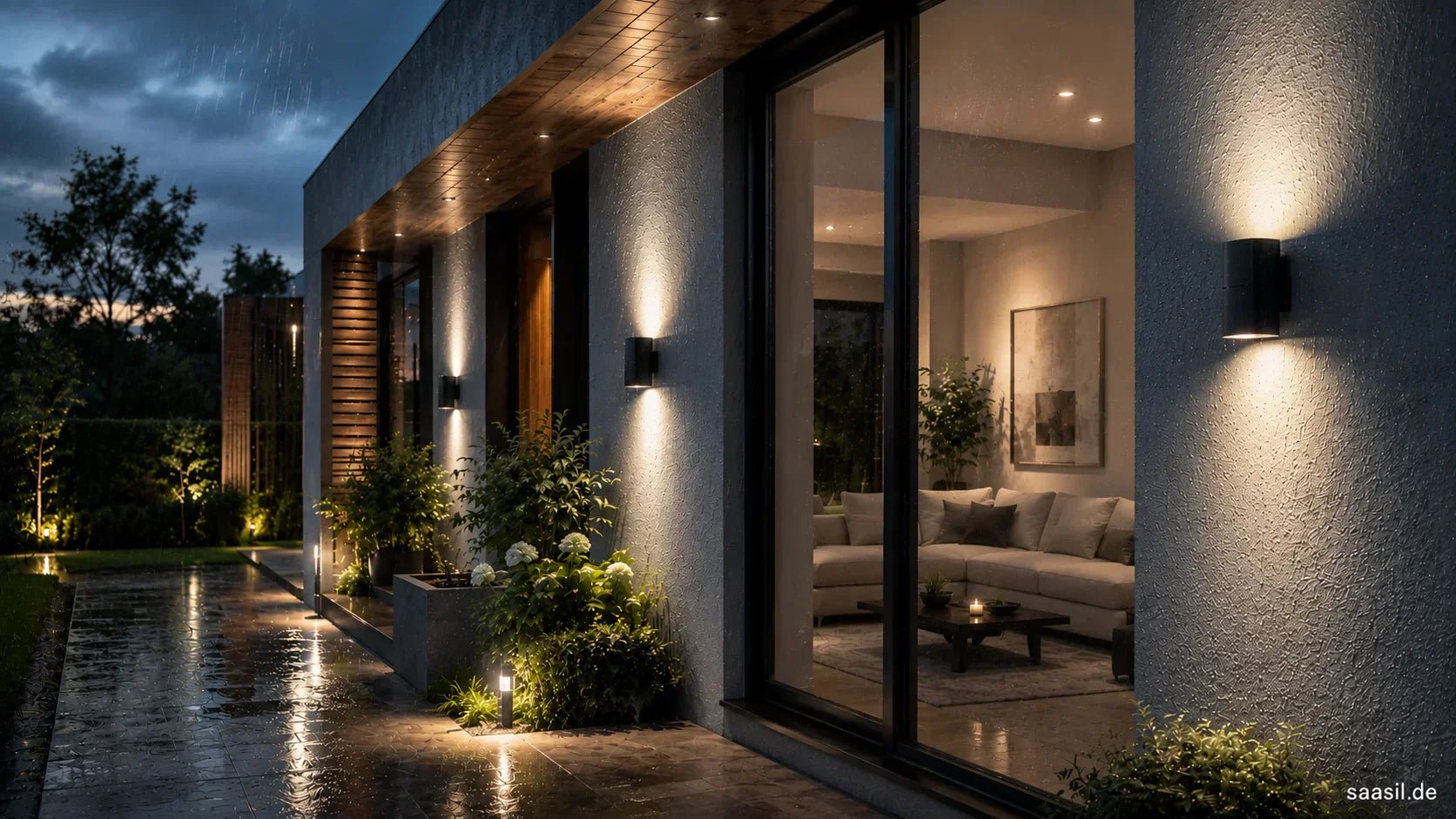
An indoor light sometimes looks just like an outdoor light – same design, similar price. But anyone who installs a standard indoor light outside risks a short circuit, a malfunction, or, in the worst case, an electric shock. The difference lies on the inside – and on the packaging.
What distinguishes indoor from outdoor lights?
The crucial difference is the IP rating. Indoor lights are designed for dry rooms – they usually have IP20, meaning no protection against water. Outdoor lights, on the other hand, must permanently withstand wind, rain, snow, UV radiation, and fluctuating temperatures. For this, they require a significantly higher level of protection.
But it's not just the IP rating that makes the difference. Outdoor lights are made of different materials – aluminum, stainless steel, or weather-resistant plastic – that withstand the elements for years. Indoor lights made of standard metal or plastic will rust, fade, or become brittle due to UV radiation.
Which IP rating do I need and where?
Not every outdoor area is the same. Requirements vary depending on the location:
Under a canopy or covered entrance: at least IP23 – spray-proof. The light is protected from direct rain, but wind from the side can bring moisture.
On a house wall or under a roof: at least IP44 – splash-proof from all directions. This is the standard for most outdoor wall lights.
In the garden, on the terrace, unprotected: at least IP65 – dust-tight and jet-proof. These lights can even withstand being hit with a garden hose.
Recessed ground lights in the driveway or in a pond: at least IP67 – protected against temporary immersion. During heavy rain, ground lights can be completely covered in water.
Can I also use an outdoor light indoors?
Yes, that is no problem. An outdoor light with IP65 works perfectly fine indoors as well – it is simply more protected than necessary. The reverse is not true: an indoor light with IP20 must never be used outdoors or in damp rooms.
What else should I look for in outdoor lights?
In addition to the IP rating, there are other important points. The material determines durability – stainless steel and aluminum are the most resistant. Seals made of silicone last longer than those made of rubber, which become hard and cracked over time. And those who live near the coast should look for saltwater-resistant materials – standard aluminum can corrode faster than expected due to salt deposits.
A practical tip: Clean outdoor lights once a year and check seals for cracks – especially after winter. This will make them last significantly longer.
The one rule that explains everything
Indoor lights belong inside, outdoor lights belong outside. The IP rating on the packaging shows at a glance whether a light is suitable for the desired location. The more exposed the location, the higher the value must be. Once you have understood this, you will never make a mistake when buying lights again.
Take a look at our outdoor lights – from covered entrance doors to unprotected garden paths, we have the right protection level for every location.


